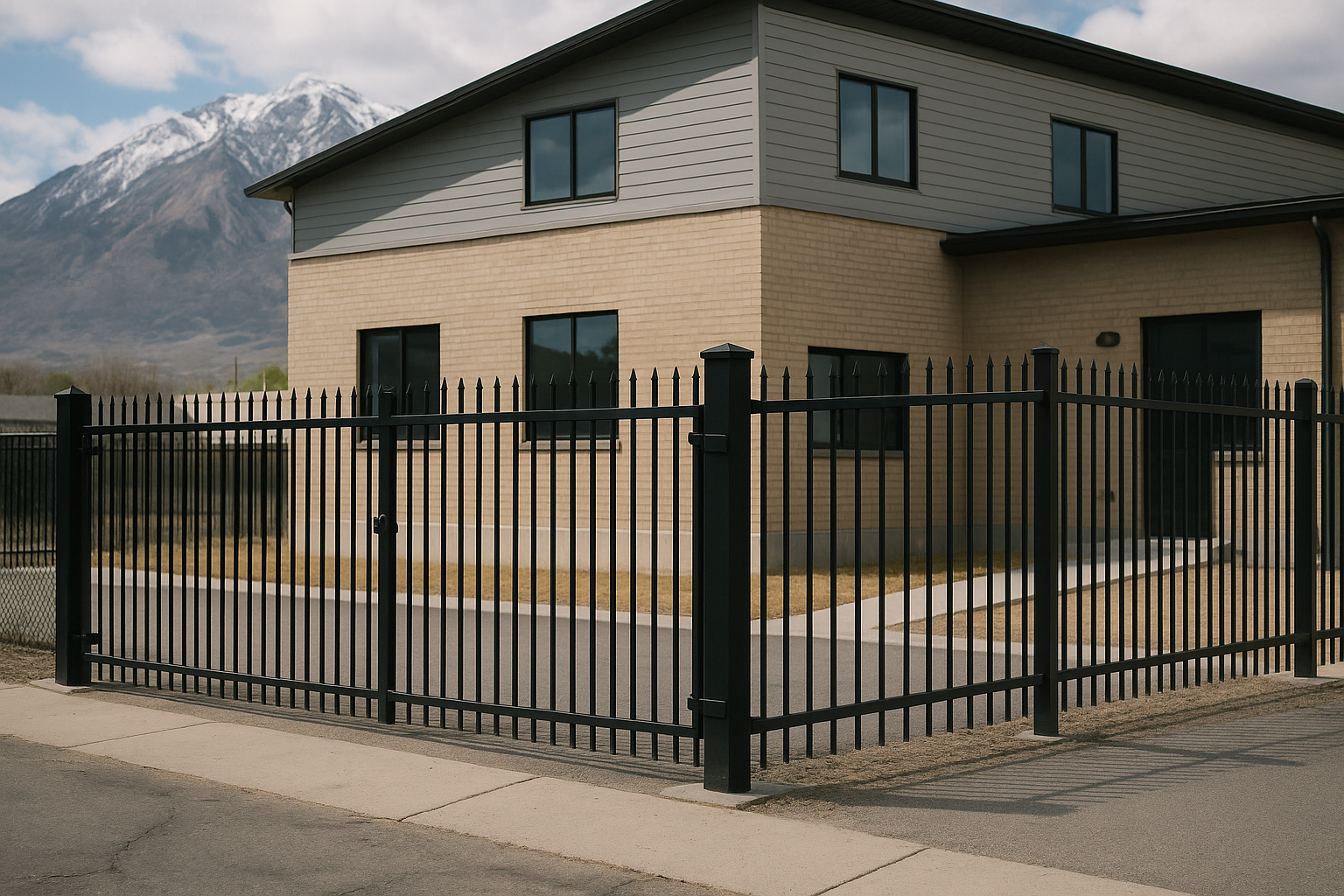
Protecting your business assets isn’t something you want to leave up to a flimsy setup that groans every time a canyon wind blows through the Wasatch Front. If you own or manage commercial property in Utah, finding the right heavy-duty fencing means balancing hardcore security with local zoning laws and brutal weather. Honestly, picking the perfect commercial barrier can feel overwhelming, but we are going to break it down so you know exactly what your specific location requires.
Why Commercial Fencing Isn’t Just a Bigger Backyard Fence
Let me explain. A lot of folks assume that commercial fencing is basically just a taller version of the white picket or Vinyl privacy fence they have at their house. But here’s the thing—commercial barriers operate on an entirely different level. They have to withstand constant, daily abuse. We are talking about heavy machinery backing up a little too close in a Salt Lake County industrial park, or relentless, bustling foot traffic around a retail complex in Utah County. It has to be tough. It has to be reliable.
You know what? It is not just about keeping people out of your hair. It is heavily tied to your overall liability as a business owner. A heavy-duty commercial fence protects you from massive lawsuits if someone wanders onto your active construction site or equipment yard and gets hurt. If there is no fence, or a easily broken one, the blame often falls on the property manager.
And then there is the vital visual aspect of the whole thing. You want something tough, sure, but you do not necessarily want your Davis County corporate office looking like a maximum-security lockdown facility. Striking that perfect, delicate balance between rugged durability and inviting curb appeal takes a bit of strategy and planning.
You also have to remember that commercial building codes are vastly different from residential ones. Cities have very strict, sometimes confusing rules about height restrictions, property line setbacks, and line-of-sight clearance for traffic corners. If you just throw up a ten-foot steel wall without checking the local municipal ordinances, you might find yourself forcefully tearing it down a month later.
Picking Your Armor: The Big Three Materials
So, what are your actual options when it comes to the building materials? There are a few heavy hitters in the commercial fencing game, and each brings something completely unique to the table. Choosing the wrong material is a costly mistake, so let’s look at what actually works best for local businesses.
First up is commercial-grade Chain link fencing. We are not talking about the thin, easily bendable wire stuff you buy at a local retail hardware store. Industrial chain link uses a much thicker gauge of heavily galvanized steel wire. It is highly functional, incredibly cost-effective, and honestly, it gets the job done perfectly for sprawling vehicle and equipment yards. Many businesses choose to have it coated in black or green Vinyl to prevent long-term rust and help it blend smoothly into the surrounding background.
But maybe your property needs something substantially stronger. That is exactly where heavy-duty steel fencing comes into play. Steel is incredibly rigid and totally unforgiving. If security is your absolute top priority and you need to stop a physical threat—like a vehicle—in its tracks, steel is your best friend. The downside? It is incredibly heavy, takes much more effort to install, and absolutely requires a high-quality powder coating so it doesn’t succumb to creeping rust after a wet Utah winter.
Then we have commercial Aluminum fencing. A huge number of commercial properties lean heavily towards aluminum because it perfectly mimics the upscale, classic look of traditional Wrought Iron without the endless rust issues. Aluminum is naturally resistant to chemical corrosion. This makes it an amazing, low-maintenance choice for properties located right next to heavily salted roads during the snowy months.
Here is a quick breakdown of how these three primary materials stack up against each other:
| Material Type | Security Level | Maintenance Needs |
|---|---|---|
| Commercial Chain Link | Moderate to High | Very Low |
| Heavy-Duty Steel | Extremely High | Moderate (Needs Rust Checks) |
| Commercial Aluminum | Moderate | Extremely Low |
Surviving the Elements from Bluffdale to Bountiful
Here in Utah, our weather has a bit of a personality disorder. One day it is a scorching, dry 100 degrees, and the very next day, a freezing canyon wind is howling through your property at 60 miles an hour. Your perimeter security has to handle all of those wild swings without buckling or fading.
I always tell business owners that winter snow removal is the silent, sneaky killer of commercial fences. Think about it for a second. When the massive city and private plows come tearing through your commercial parking lot, they push incredibly heavy piles of snow—along with hidden chunks of solid, dirty ice—right up against your fence line. A standard, run-of-the-mill residential fence will simply bow, warp, or completely snap under that immense pressure. A true heavy-duty fence will stubbornly stand its ground.
And let’s not forget about the harsh sun and the salt. We sit at a high elevation, which means intense UV rays will bleach and degrade cheap plastic materials surprisingly fast. Plus, if your business is anywhere near the Great Salt Lake, or situated near a major highway that gets heavily salted from November to March, airborne corrosion is a constant, daily threat. Choosing specialized UV-resistant powder coatings or heavily galvanized metals is not just a fancy luxury. It is an absolute necessity if you want your fencing investment to last longer than a couple of short seasons.
High-Security Add-Ons: Giving Your Perimeter Some Teeth
Sometimes a standard, tall fence just is not quite enough to deter a determined trespasser. Depending on what exactly you are storing or protecting on-site, you might need to actively add a few extra layers of visual and physical deterrence.
Barbed Wire and Razor Ribbon
You see this classic setup all the time around auto salvage lots and sprawling self-storage facilities. Adding three tight strands of angled barbed wire to the very top of a tall chain-link fence is a highly effective way to stop climbers. It is visually intimidating, and frankly, it works. However, you have to be very careful here. Many cities in Salt Lake County and Davis County have tight zoning laws regarding where and how you can legally use barbed wire, especially if your business is situated awkwardly close to a residential neighborhood.
Anti-Climb Mesh
If barbed wire is a little too aggressive for your welcoming brand image, anti-climb mesh is a fantastic, modern alternative. The tiny gaps in the heavy steel mesh are woven so tightly together that a person literally cannot get their fingers or the toes of their shoes into the holes to get a grip. It looks sleek, architectural, and modern, but it is virtually impossible to scale without heavy equipment.
Privacy Slats and Wind Screens
You might naturally think a giant, solid wall is the best defense. Actually, clear visibility is often much better for security because it entirely removes hiding spots for potential trespassers. But if you are running a messy salvage yard or just hiding ugly commercial dumpsters from the main road, privacy is key. Heavy-duty vinyl privacy slats woven directly into the chain link can completely block the view from the busy street while also sharply cutting down on wind damage.
Don’t Forget the Gate: The Unsung Hero
You can build the strongest, tallest barricade in the entire world, but if your entry gate is weak, the whole security system fails instantly. A chain is only as strong as its weakest link, right?
When dealing with large commercial sites, you will very likely hear the specific term cantilever gate. Let’s strip away the confusing industry jargon for a quick second. A cantilever gate is basically a large, heavy sliding gate that does not run on wheels along the ground. Instead, it is suspended entirely in the air on heavy-duty rollers attached to massive, deeply buried support posts.
Why does this matter for you? Because when we suddenly get a foot of heavy snow overnight in Utah County, a standard ground-rolling gate will freeze completely shut in its track. A cantilever gate hovers safely above the ice, rocks, and snow, gliding open effortlessly so your morning delivery trucks aren’t stuck idling angrily out on the main road.
You also have to think deeply about your daily access control. Are your employees using punch keypads, encrypted swipe cards, or an automated underground vehicle sensor? Tying your heavy-duty fencing in with a reliable, commercial-grade electronic gate operator turns a simple physical barrier into a highly intelligent security system. It accurately tracks who comes in, monitors who leaves, and keeps the honest people honest.
The Financial Side: More Than Just a Sunk Cost
A lot of local business owners look at the final price tag of commercial fencing and immediately wince. I totally get it. It is a big upfront capital expense. But you really have to start looking at it as a long-term investment that actively pays you back over time.
First off, let’s talk about those expensive insurance premiums. Many commercial insurance providers will actually lower your monthly liability and property rates if you install a certified, heavy-duty security fence around your perimeter. They look at the data, and they know that a good, solid barrier heavily reduces the statistical chances of theft, random vandalism, and accidental injury on your property. Over a few short years, those insurance savings add up significantly.
Then there is the sheer, painful cost of replacing stolen goods. If you are casually storing valuable copper wire, expensive company fleet vehicles, or rare construction materials in an open, unlit lot, you are basically inviting local thieves to come take a closer look. Spending the money properly on a heavy-duty steel fence drastically stops those frustrating losses before they ever happen. It buys you lasting peace of mind, which is something you really cannot put a Concrete price tag on.
High Security Doesn’t Have to Be Ugly
There is a strange, persistent myth floating around out there that highly secure commercial properties have to look incredibly harsh and uninviting. You really do not have to sacrifice beautiful aesthetics for safety. If you are putting up a solid fence around an upscale apartment complex or a sleek, modern tech building, welcoming curb appeal is a massive part of your overall property value.
You can absolutely blend different materials together to get the absolute best of both worlds. For example, you might use gorgeous, ornamental aluminum along the front facade facing the main street to impress visiting clients. Then, as the fence wraps around the building, you can smoothly transition to high-security, black vinyl-coated chain link around the back utility areas where nobody really looks. This smart, hybrid strategy saves you serious money while keeping the public-facing areas looking incredibly sharp.
Planting some drought-resistant, local Utah shrubs right along the fenceline can also wonderfully soften the overall look. It magically turns a rigid, imposing security measure into a pleasant, green landscaping feature. It is all about local context and smart planning. The right setup feels like a natural, thoughtful extension of your property, rather than a military cage.
Ready to Secure Your Utah Property?
Making the right choice really comes down to knowing exactly what your growing business needs to protect and understanding how the harsh local environment is going to test it over the years. Whether you are actively dealing with a bustling, high-traffic retail space in Davis County or an expanding, heavy-duty industrial lot down in Salt Lake County, getting the perimeter secured properly the very first time saves you massive, expensive headaches later.
We intimately know the local city building codes. We know the unpredictable, wild weather. And most importantly, we know exactly how to build heavy-duty structures that actually last through the toughest conditions. You shouldn’t have to guess or lose sleep wondering if your commercial property is truly protected at night. Let our highly experienced team at Utah Fencing Company help you confidently figure out the exact commercial fence that fits your specific security needs and your company budget.
Give us a shout today. Call us at 801-905-8153 or Request a Free Quote.