Standing in your backyard with a morning cup of coffee is one of life’s little pleasures, but it’s decidedly less relaxing when you accidentally make eye contact with your neighbor who’s also in their bathrobe. Whether you’re trying to keep the dog from sprinting down the street or you just want to block out the noise from the highway, a fence is more than just property lines; it’s about peace of mind.
Let’s Start with the “Why”
Before we even look at a single catalog or color swatch, you have to ask yourself what this fence is actually doing for you. It sounds simple, right? But you’d be surprised how many homeowners in Salt Lake County skip this step and end up with a fence that looks pretty but doesn’t solve their problems.
Are you trying to keep a 100-pound German Shepherd contained? Or are you just trying to stop the deer from eating your tulips in Davis County? Maybe you have a pool and legally need a safety barrier.
Here’s the thing: Form follows function. If privacy is your main goal, that beautiful Wrought Iron Fence isn’t going to help you, no matter how classy it looks. If you want to preserve a view of the mountains from your patio in Utah County, a six-foot solid Vinyl wall is going to feel like a prison.
Write down your top three priorities. Is it privacy? Security? Curb appeal? Be honest about it. There’s no wrong answer, but knowing this upfront saves you a headache later.
The Great Material Debate
Okay, this is where people usually get stuck. There are so many options these days that it can feel a little overwhelming. In Utah, we have a unique climate—blazing hot summers and freezing, snowy winters—which means materials react differently here than they might in, say, Florida.
Let’s break down the heavy hitters.
Vinyl Fencing: The Utah Favorite
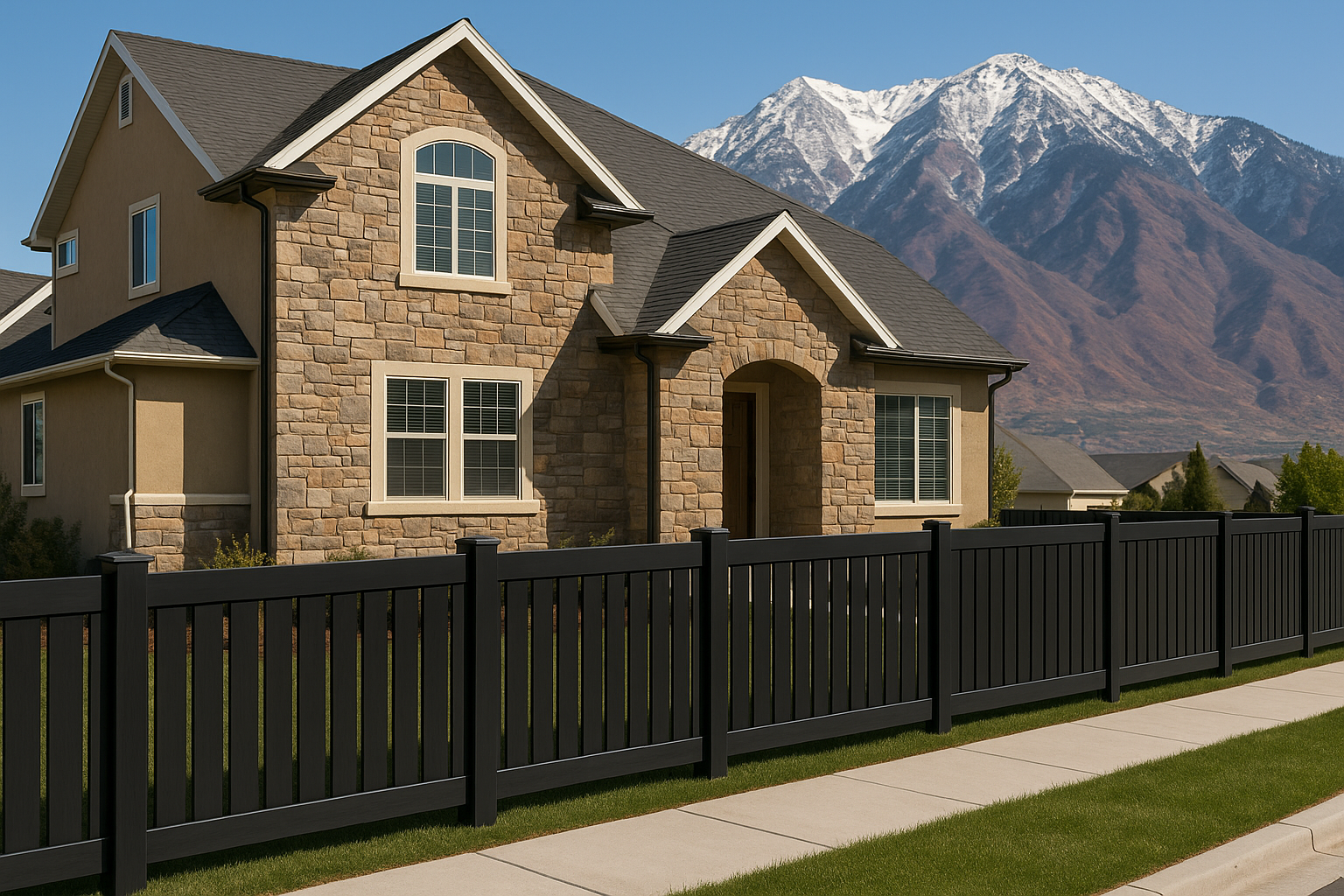
You see it everywhere from Sandy to Layton, and for good reason. Vinyl fencing is incredibly resilient. It handles the UV rays reasonably well (especially high-quality heavy-duty vinyl), and it laughs in the face of sprinklers.
- Pros: Virtually zero maintenance. You just hose it off. It doesn’t rot, warp, or give you splinters.
- Cons: If you buy the cheap stuff from a big box store, it can become brittle in the cold. It can also crack if a teenager backs a car into it (don’t ask me how I know).
Wood Fencing: The Classic Look
There is something undeniably warm and inviting about a cedar privacy fence. It smells good, it looks natural, and it blends in with landscaping perfectly.
- Pros: It’s customizable. You can stain it any color. It’s also easier to repair; if a board breaks, you just replace that board.
- Cons: Maintenance. You have to stain it every few years, or the Utah sun will turn it grey and brittle. Also, wood moves. It swells in winter and shrinks in summer.
Ornamental Iron: The “View” Fence
If you live on the bench and have a view of the valley, do not block it with wood. Ornamental iron gives you distinct boundaries and security without closing you in.
- Pros: Extremely durable and high-end aesthetic. Increases property value.
- Cons: Zero privacy. Also, it can be pricier than other options depending on the style.
Chain Link: The Budget-Friendly Workhorse
Look, chain link gets a bad rap, but it’s practical. If you have a huge lot in a rural part of Utah County and need to fence an acre for horses or dogs, you probably don’t want to pay for 500 feet of vinyl.
- Pros: Affordable, durable, and effective.
- Cons: It’s not winning any beauty contests.
Here is a quick breakdown to help you visualize the trade-offs:
| Feature | Vinyl | Wood (Cedar) | Ornamental Iron | Chain Link |
|---|---|---|---|---|
| Upfront Cost | Moderate | Moderate/High | High | Low |
| Maintenance | Very Low | High | Low | Very Low |
| Privacy | Excellent | Excellent | None | Low |
| Lifespan | 20+ Years | 10-15 Years | 25+ Years | 20+ Years |
The Weather Factor: Wind, Snow, and Sun
You know what? The weather here is weird. We get four distinct seasons, sometimes all in the same week. This matters for your fence.
In Davis County specifically, we deal with those fierce canyon winds. I’ve seen entire sections of cheap fence panels ripped right out of the ground after a windstorm. If you live in a high-wind area, you need to think about wind load.
A solid privacy fence acts like a sail. If the wind hits it at 60 mph, something has to give. For windy areas, we often recommend reinforced posts (using steel inserts inside the vinyl posts) or choosing a style that allows some air to pass through, like a shadow-box Wood Fence or iron.
Then there is the soil. Utah soil varies wildly. In some parts of Salt Lake, it’s sandy; in others, it’s pure clay or solid rock. This affects how deep the posts need to go and how much Concrete is needed. Frost heave is another issue—when the ground freezes and thaws, it can push posts up out of the ground if they aren’t set deep enough below the frost line.
Regulations, HOAs, and Being a Good Neighbor
I know, nobody likes paperwork. It’s boring. But you ignore this part at your own peril.
Before you dig a single hole, you need to check with your city planning office. Most cities in Utah have restrictions on fence height. Usually, you can’t go higher than six feet in the backyard and three or four feet in the front yard (to preserve sightlines for traffic). Corner lots have even trickier rules.
And then there’s the HOA.
If you live in a community with a Homeowners Association, they probably have strict guidelines on what materials and colors you can use. You don’t want to be the guy who installs a beautiful $5,000 fence only to get a letter a week later demanding you tear it down because it’s the wrong shade of tan.
A quick tip on neighbors:
Technically, if the fence is on your property, you can do what you want (within code). But it’s just good karma to chat with your neighbor about it. Sometimes, if the fence runs along the property line, neighbors will even split the cost with you. It’s worth asking! At the very least, make sure you know exactly where your property lines are. A survey costs a few hundred bucks, but moving a fence costs thousands.
Design and Aesthetics: It’s Not Just a Wall
Fences used to be pretty utilitarian, but now they are part of your home’s “curb appeal.”
Think about the style of your house. If you have a modern, boxy home with clean lines, a rustic split-rail fence is going to look disjointed. You might want horizontal wood slats or sleek black iron. If you have a traditional brick rambler, a white Vinyl Fence with a lattice top looks classic and clean.
Don’t forget the gates.
The gate is the moving part, the part you interact with. Don’t skimp on the hardware. A sagging gate is one of the most annoying things in the world. You want wide enough gates, too. Think about the future—will you ever need to get a riding lawnmower or a Bobcat into the backyard for a landscaping project? A standard 3-foot gate might not cut it. Go for a 4-foot or double-drive gate if you have the space.
Also, consider mixing materials. We are seeing a lot of folks who do wood fencing with metal posts. It looks cool, has an industrial vibe, and the metal posts don’t rot out at the ground level like wood posts do. It’s the best of both worlds.
The “DIY” vs. “Pro” Dilemma
I get it. We are in Utah. We are a DIY culture. We like to fix our own trucks and finish our own basements. But fencing is harder than it looks.
Digging post holes is back-breaking work, specifically in our rocky soil. You hit one giant rock, and your Saturday is ruined. Then you have the issue of keeping the line straight and the posts level. A fence that leans even a couple of inches looks terrible and fails faster.
There is also the hidden danger of utilities. You have to call Blue Stakes before you dig. Hitting a gas line or fiber optic cable is a disaster you don’t want to pay for.
If you have the tools, the back strength, and the patience, go for it. But honestly? For the amount of time and effort it takes, hiring a professional fence company usually pays off in longevity. We have the augers to drill through the hardpan soil, and we know how to mix the concrete so it sets right in cold weather.
Budgeting: Buy Nice or Buy Twice
Cost is always a factor. But try to look at the “lifetime cost” rather than just the Installation price.
Wood is cheaper upfront than vinyl or iron. But remember the stain? You’re buying buckets of stain and spending a weekend brushing it on every two or three years. Over 15 years, that adds up in both money and lost weekends.
Vinyl costs more initially, but after it’s installed, you basically spend zero dollars on it for the next 20 years.
If the budget is tight, be strategic. Maybe you do a nice privacy fence on the sides where the neighbors are close, and a cheaper Chain Link Fence along the back property line if it faces a field or alley. You don’t have to use the same expensive material for the entire perimeter.
Why Utah Fencing Company?
At the end of the day, your home is your sanctuary. You want to feel safe, secure, and proud of how it looks. Choosing the right fence isn’t just about lumber and concrete; it’s about defining your space and making your home feel complete.
We know the soil, we know the wind, and we know the regulations in Salt Lake, Utah, and Davis counties. We aren’t just guys with a truck; we are craftsmen who care about straight lines and sturdy posts.
Whether you need a sleek vinyl barrier to block out the world or a custom cedar creation to highlight your garden, we’ve got you covered.
Ready to upgrade your backyard?
Don’t spend another weekend staring at a sagging fence or worrying about the dog getting out. Let’s get this done right.
Call us at 801-905-8153 or Request a Free Quote today to get started.