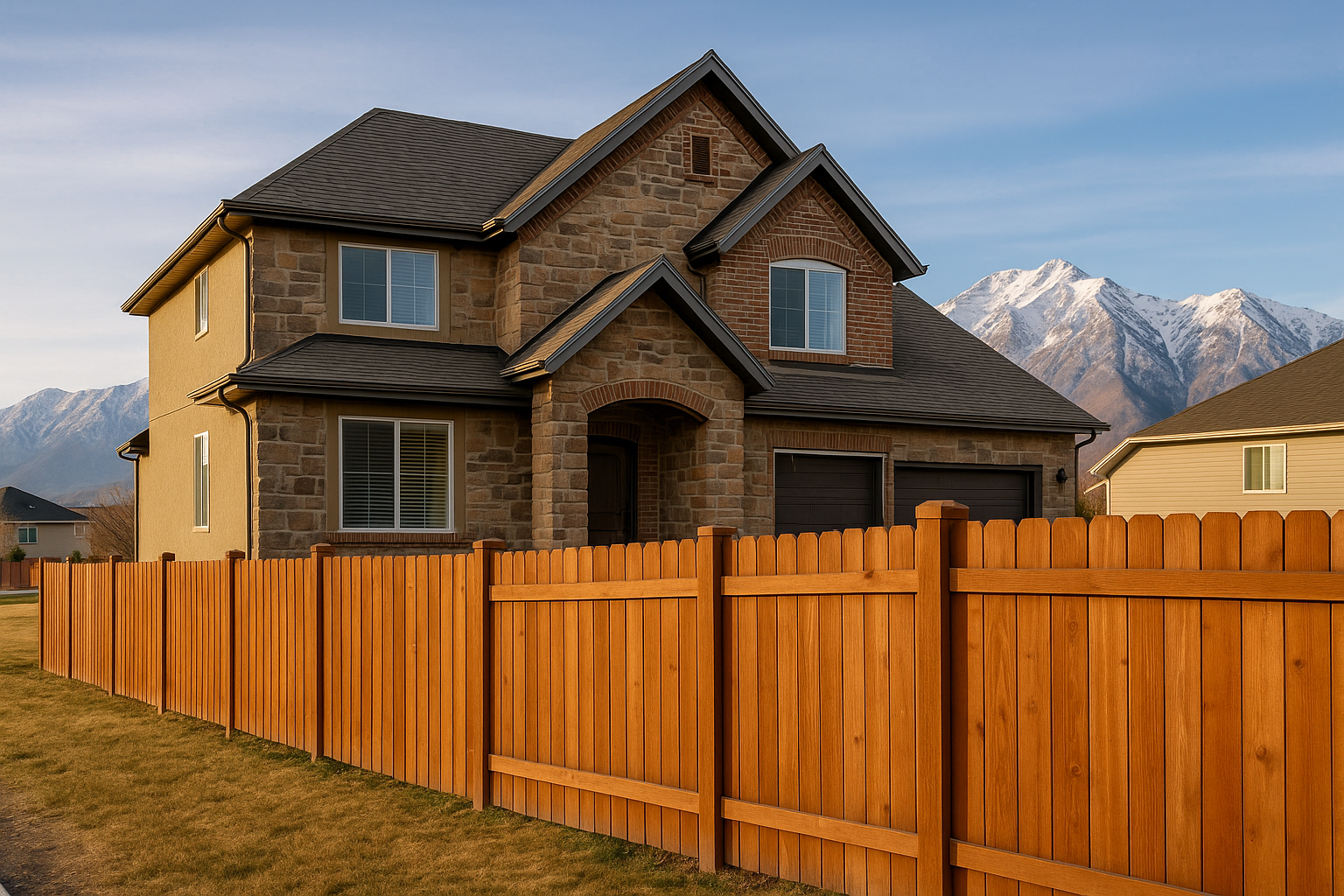
There’s something undeniably classic about a Wood Fence, isn’t there? It frames your yard, keeps the dog in check, and adds that warm, organic touch to your property, but let’s be real—keeping it looking fresh in our high-desert climate takes a bit more than just wishful thinking.
The “Why” Behind the Work
You know, most people install a fence and sort of forget about it until a slat falls off or it turns that ghostly shade of grey. But here in Utah, ignoring your Wood fence is a recipe for a lighter wallet down the road. Between the scorching UV rays we get in July and the heavy snow load in January, wood takes a beating.
Think of your fence like a deck that stands vertically. It’s exposed to the elements 24/7. When wood dries out, it cracks; when it absorbs too much moisture, it warps or rots. Honestly, maintenance isn’t just about aesthetics—it’s about protecting your investment. You paid good money for that privacy, so let’s make sure it lasts more than a few seasons.
The Seasonal Inspection: Walk the Line
Before you run out and buy gallons of stain, you need to know what you’re working with. I like to do this twice a year—once in the spring when the snow melts, and again in late fall before the freeze sets in.
Grab a cup of coffee and just walk the perimeter. You aren’t looking for perfection; you’re looking for problems.
What to Look For:
- The Wiggle Test: Grab your posts. Do they move? If a post wobbles at the base, you might have rot underground or the Concrete footing has cracked. In places like Davis County, where the wind can really whip through the canyons, loose posts are a ticking time bomb.
- Loose Nails or Screws: Wood swells and shrinks with temperature changes. Over time, this pushes nails out. If you catch a sleeve on a popping nail, you’ll wish you’d brought a hammer.
- Ground Contact: Ideally, your fence pickets shouldn’t touch the dirt. Soil holds moisture, and moisture attracts termites and rot. If the wood is buried, you might need to trim the bottom or clear away the landscaping.
- Knotholes: Did a knot pop out? It happens. It’s a small hole, but it lets water into the center of the wood.
Cleaning: More Than Just a Hose Down
Okay, so your fence is structurally sound, but it looks… tired. Maybe it’s grey, or maybe it has those green algae spots near the sprinklers (we’ll talk about sprinklers in a minute). You need to clean it before you can seal it.
A lot of folks get excited about power washers. I get it; they are incredibly satisfying to use. But here’s the thing: pressure washers can destroy wood fences if you aren’t careful. If you get too close or use the wrong tip, you’ll fuzz up the wood fibers, leaving marks that look like permanent scars.
If you’re going to power wash, keep the pressure low (around 1500 to 2000 PSI) and use a wide fan tip. Keep the nozzle moving and stay about 12 inches away from the surface.
The Gentle Approach
For most fences, a simple scrub with a deck cleaner is safer and just as effective. You can even make your own solution if you’re feeling handy.
| Cleaning Solution | Ingredients | Best Use |
|---|---|---|
| Mild Wash | Warm water + Dish soap | General dirt and bird droppings |
| Mold Killer | 1 part bleach + 3 parts water | Mildew spots or algae (Green stains) |
| Brightener | Oxalic acid based cleaner | Removing grey oxidation and tannin stains |
Apply the cleaner, let it sit for about 10-15 minutes (don’t let it dry out!), and then scrub with a stiff-bristle brush. Rinse it off with a garden hose. You’ll be amazed at how the natural color of the Cedar or Redwood comes back just from a good wash.
The Great Debate: Stain vs. Paint
Let me save you a headache: Don’t paint your wood fence.
I know, I know. White picket fences look dreamy in movies. But in Salt Lake County, paint is a nightmare. Paint forms a film on top of the wood. When moisture gets inside the wood (and it will), it tries to escape. Since the paint seals the surface, the moisture pushes the paint off, causing peeling and cracking. Once it starts peeling, you have to scrape the whole thing to fix it. It’s miserable work.
Stain is your best friend. Specifically, a penetrating oil-based stain. Unlike paint, stain soaks into the wood fibers. It allows the wood to breathe while repelling water. Plus, it usually contains UV inhibitors to stop that sun-bleaching effect.
The “Water Test”
Not sure if your fence is ready for stain? Splash some water on the boards.
- If it beads up: The old sealer is still working. Wait another season.
- If it soaks in immediately: The wood is thirsty. It’s time to stain.
Applying the Stain: Tips from the Pros
You’ve cleaned the fence, let it dry for at least 24 to 48 hours (this is crucial—don’t trap moisture inside!), and bought your stain. Now what?
You can spray, roll, or brush. Rolling is fast, but it can be messy. Spraying is efficient but requires masking off everything nearby—your house, your neighbor’s car, the rose bushes.
My advice? Use a pump sprayer to get the stain on the wood, and then immediately back-brush it. This means running a wide brush over the wet stain to push it deep into the grain and smooth out any drips. It ensures even coverage and helps the stain last longer.
Pro Tip: Check the forecast. You want a window of dry weather. If it rains three hours after you stain, you’re going to have a spotted mess on your hands. Also, try to avoid staining in direct, blazing sunlight. If the surface is too hot, the stain dries before it penetrates. Early mornings or overcast days are perfect.
The Sprinkler Situation
We have to talk about your irrigation. In Utah County and surrounding areas, secondary water is full of minerals. If your sprinkler heads are hitting your fence every morning, you are going to see a distinct, semi-circular white or orange stain.
Hard water deposits are tough to remove, and the constant cycle of wet-dry-wet-dry will rot those boards faster than anything else.
Adjust your sprinkler heads. It’s a ten-minute job that adds five years to your fence’s life. If you can’t avoid hitting the fence, you’ll need to be extra diligent about applying a high-quality waterproofer in those splash zones.
Handling Minor Repairs
Sometimes, maintenance means breaking out the tool belt.
If you have a cracked slat, it’s usually easier to replace the single board than to try and glue it. You can find matching pickets at most lumber yards, but keep in mind that new wood will look brighter than the old wood. You might need to stain the new piece to match, or let it weather for a few months.
Leaning posts are a bigger issue. If the post is snapped at the ground level (very common with rot), you have two options: replace the post entirely, or use a metal “post mender” or spur. Digging out a concrete footing is hard labor—no sugarcoating that. If the fence is old, sometimes it makes more sense to install a “sister post” right next to the broken one rather than digging out the massive concrete chunk.
And let’s mention the gates. Gates always sag eventually. It’s just gravity doing its thing. If your gate is dragging, check the hinge screws first—they often work loose. If the frame itself is sagging, installing a turnbuckle kit (a diagonal cable with a tightener) can lift the latch side back up to square.
When to Call in the Cavalry
Look, DIY is great. It saves money and gives you that sense of accomplishment. But there comes a point where the effort outweighs the benefit. If your fence is leaning significantly, if more than 20% of the posts are rotted, or if the rails are detaching from the posts, you might be looking at a replacement rather than a repair.
Also, staining a large perimeter fence is a massive job. It can take a homeowner several weekends to do what a professional crew can knock out in a day. If you’re staring at 200 linear feet of cedar and feeling overwhelmed, there’s no shame in bringing in help.
Wrapping It Up
Your fence is the frame for your home’s exterior. A well-maintained wood fence boosts your curb appeal and keeps your property secure. It doesn’t have to be a chore that ruins your summer. A little bit of cleaning, a careful inspection, and a fresh coat of stain every few years will keep it standing strong against the Utah elements.
Whether you need a full replacement, a few sturdy repairs, or just don’t have the time to tackle the maintenance yourself, we’re here to help.
Ready to give your yard the border it deserves?
Call us at 801-905-8153 or Request a Free Quote today!