If you live along the Wasatch Front, you know exactly what happens when those canyon winds start howling—you find yourself holding your breath, hoping your backyard fence doesn’t end up in the neighbor’s pool. It’s a struggle we see all the time, from the benches in Salt Lake County to the growing suburbs of Utah County. But here’s the thing: fencing technology has come a long way from the simple cedar planks of the past, and reinforced Concrete is changing the game in ways most people haven’t caught up with yet.
Wait, Concrete Fencing? Is That Just a Wall?
Okay, let me stop you right there because I know what you’re picturing. You’re probably thinking of those drab, grey cinder block walls that look like they belong around a prison or an old industrial park. Honestly, if that were the only option, I wouldn’t blame you for sticking with Vinyl. But the industry has flipped the script.
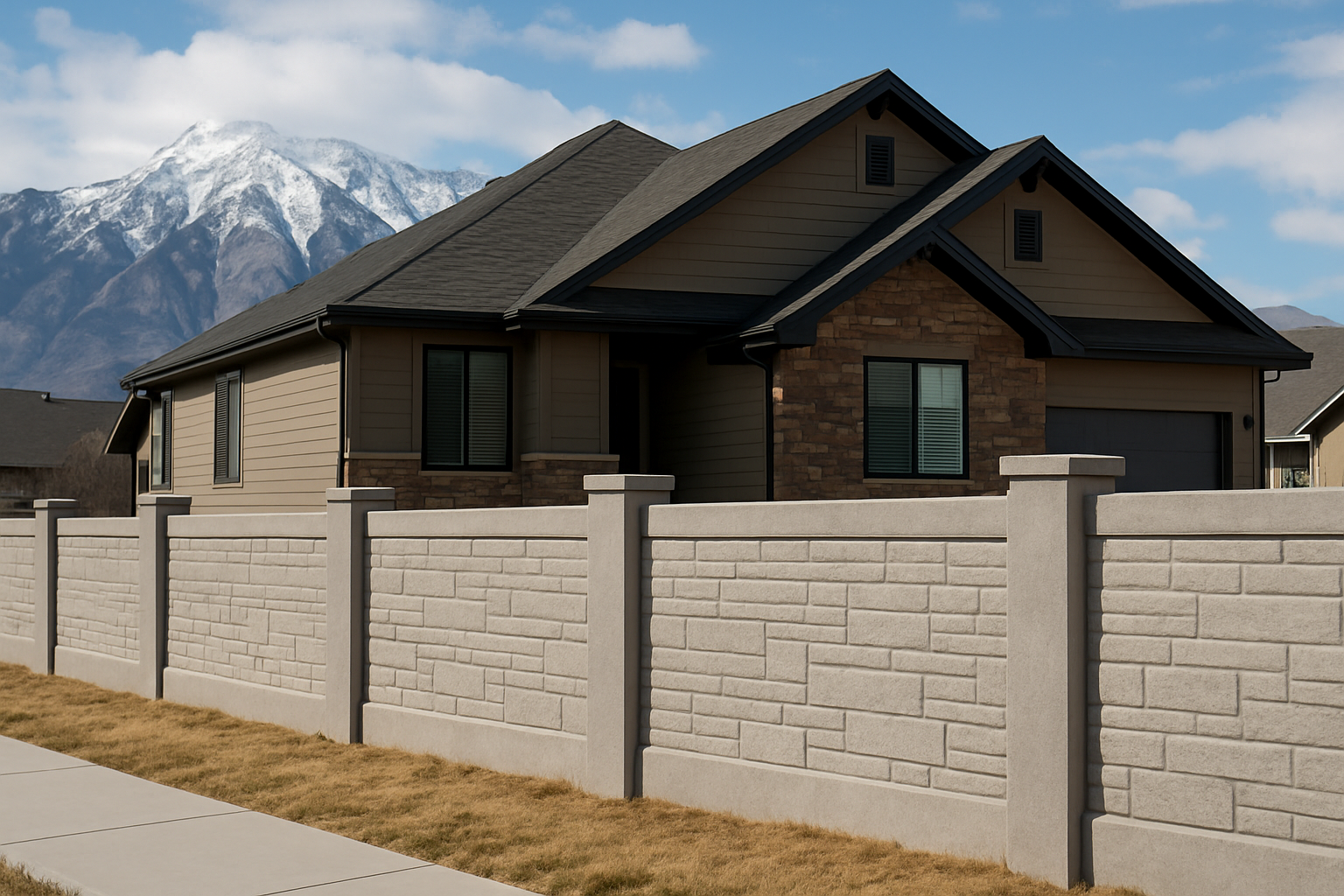
Reinforced concrete fencing today is a chameleon. Thanks to massive leaps in molding and casting technology, we can now install concrete walls that look exactly like seasoned Wood, stacked stone, or even sophisticated brickwork. You can walk right up to some of these fences, touch them, and still struggle to believe it’s actually solid concrete.
The innovation isn’t just in the looks, though—that’s just the icing. The real magic is happening inside the material itself. We are talking about high-performance engineering that takes the worry out of Utah’s crazy weather patterns.
The Science of Strength: It’s Not Just Cement Anymore
Let’s get a little technical for a second, but I promise to keep it painless. Traditional concrete is strong, sure, but it can be brittle. If the ground shifts—and we all know the ground loves to shift around Davis County—old-school concrete can crack.
The new generation of fencing uses advanced fiber reinforcement. Instead of just relying on steel rebar, which is great but can corrode over fifty years, manufacturers are mixing in synthetic fibers or using galvanized reinforcement grids that bind the concrete together on a microscopic level.
What does this mean for you?
- Flexibility: It sounds weird to say concrete is flexible, but these micro-structures allow the fence to absorb vibration (like heavy traffic or minor tremors) without snapping.
- Freeze-Thaw Resistance: This is huge for us. When water gets into tiny cracks and freezes, it expands and busts concrete apart. The new, denser mixtures used in precast concrete fencing are nearly impermeable to water.
It’s basically the superhero version of the sidewalk out front. It takes a beating so your wallet doesn’t have to later on.
The Aesthetics: Looking Good While Being Tough
Remember how I mentioned the “chameleon” aspect? This is where the manufacturing process gets really cool. They use molds cast from real, natural materials. So, if you want a wood-grain Concrete Fence, the mold was made from actual timber planks. It captures the knots, the grain texture, and the slight imperfections that make wood look organic.
Once installed, these fences are stained—not painted—with UV-resistant colors. Because the stain soaks into the pores of the concrete, it doesn’t peel off like paint on a picket fence.
Here is a quick breakdown of how the modern stuff compares to the classics:
| Feature | Wood Fencing | Vinyl Fencing | Reinforced Concrete |
|---|---|---|---|
| Durability | Low (Rot, warp, bugs) | Medium (Can crack in cold) | Extreme (Lasts 50+ years) |
| Maintenance | High (Stain every 2-3 years) | Low (Wash with hose) | Zero to Low (Occasional rinse) |
| Wind Resistance | Low to Medium | Medium | High (Hurricane rated) |
| Sound Blocking | Minimal | Minimal | Excellent (Reflects noise) |
| Cost | $$ | $$$ | $$$$ (But cheaper over time) |
You see the pattern here? It’s an investment upfront, but then you pretty much forget about it.
Why Utah Homeowners Are Making the Switch
Let’s talk about noise. If you live anywhere near I-15, Bangerter Highway, or a busy main street in Lehi, you know that noise pollution is real. Wood fences have gaps; sound travels right through them. Vinyl is too thin to stop heavy bass or tire drone.
Concrete acts as a sound barrier. It’s dense. Sound waves hit it and bounce back rather than traveling through to your patio. We have had customers tell us that after installing a precast stone-style fence, their backyard felt like a completely different property. It creates a sanctuary.
And then there’s the privacy factor. There are no gaps in these panels. No knotholes falling out for the neighbors to peek through. It is solid, total privacy. For families with pools or hot tubs, that peace of mind is worth its weight in gold.
The Installation Revolution: No More Messy Pours
Here is a common misconception: people think installing a concrete fence means cement trucks tearing up the lawn and weeks of drying time.
Nope. That’s the old way.
The innovation here is modular precast systems. The panels and posts are manufactured in a controlled factory environment (which ensures they cure perfectly strong). Then, we bring them to your property.
We dig the post holes, set the posts in concrete footings, and once those are set, the panels just slide right in. It’s almost like building with giant LEGOs.
- Speed: We can install large stretches of fence much faster than laying individual bricks or blocks.
- Cleanliness: There is way less mess on your property compared to traditional masonry.
- Precision: Because the pieces are made in a factory, every panel is perfectly square and sized. You don’t get that “leaning tower of Pisa” look that happens with bad bricklayers.
Let’s Talk About Value (and Resale)
I know what you’re thinking. “This sounds expensive.” And I’ll be honest with you—it is more expensive upfront than throwing up some dog-eared cedar pickets. But you have to look at the timeline.
A Wood Fence in Utah lasts maybe 10 to 15 years if you take care of it. If you have sprinklers hitting it? Maybe 7 years. You will replace that wood fence three or four times in the lifespan of one reinforced concrete fence.
Plus, think about curb appeal. In the competitive housing markets of Salt Lake and Utah Counties, details matter. A stunning, stone-look perimeter wall signals “luxury” and “security” to a buyer in a way that a weathered wood fence just doesn’t. It’s hardscaping that adds permanent value to the deed.
Is It Right for Your Property?
Concrete fencing isn’t for everyone. If you have a tiny lot and need a temporary boundary, it might be overkill. But it is perfect if:
- You back up to a busy road or public park.
- You have large dogs that chew through or dig under wood.
- You want to create a high-end “estate” feel for your home.
- You are tired of fixing wind damage every spring.
It’s also surprisingly versatile for businesses. We see a lot of commercial properties in West Valley and Orem using this to screen dumpsters or secure equipment yards because it looks professional but acts like a fortress.
A Quick Note on “The Joneses”
We all do it—we look at what the neighbors are doing. In some neighborhoods, once one person installs a beautiful Simtek or precast concrete wall, suddenly three more pop up on the same street. It creates a clean, uniform look that raises the property value for the whole block.
If you are part of an HOA, you might be surprised to find that many are actually encouraging these materials now because they don’t look trashy after five years. They stay pristine. It keeps the neighborhood looking sharp, which makes the HOA board happy (and we all know that’s a win).
So, What’s the Verdict?
Innovations in reinforced concrete have turned what used to be a cold, industrial material into a warm, aesthetic, and incredibly durable option for Utah homes. It handles our snow loads, blocks the traffic noise, and looks like a million bucks while doing it.
You don’t have to settle for a fence that you’ll have to sand and stain every other summer. You can choose something that stands the test of time.
If you are on the fence (pun intended) about what material to use for your next project, or if you just want to see what these textures look like in person, we are here to help. We know the local codes, the soil conditions, and exactly which style will make your house the envy of the neighborhood.
Ready to upgrade your property’s security and curb appeal?
Call us at 801-905-8153 or [Request a Free Quote] today. Let’s build something that lasts.