Looking out at your backyard, do you see a private sanctuary, or do you just see your neighbor’s overgrown lawn and that one dog that never stops barking? Choosing the right fence for your Utah home isn’t just about marking property lines; it’s about creating a space where you can actually relax. Whether you’re in the windy corridors of Davis County or dealing with the heavy snow loads closer to the benches in Salt Lake, the material you pick makes all the difference in how much time you spend enjoying your yard versus maintaining it.
Why Utah Weather Bullies Your Fence
Before we get into the nitty-gritty of Wood versus Vinyl, we have to talk about the elephant in the room: the weather. You know what? Utah weather is weird. We get four distinct seasons, sometimes all in the same week.
If you live here, you know the drill. We have high-altitude UV rays that act like a laser beam on anything plastic or wood, trying to bleach the life out of it. Then, winter rolls around, and you’ve got heavy, wet snow piling up against the fence panels. And let’s not forget the wind—especially if you’re up in Layton or Bountiful—where gusts can rip a poorly installed fence right out of the ground.
So, when we talk about the “best” material, we aren’t just talking about what looks pretty on Pinterest. We’re talking about what’s going to survive a Centerville windstorm and a breathless July heatwave.
Vinyl Fencing: The Utah Favorite
Let’s be honest, you see white vinyl fences everywhere in Salt Lake and Utah counties. There’s a reason for that. It’s arguably the most practical choice for our climate, even if it feels a bit ubiquitous.
Here’s the thing about vinyl fencing: it is essentially maintenance-free. Once it’s up, you’re done. You don’t have to stain it, paint it, or worry about termites deciding your property line is their lunch buffet. For busy families who’d rather spend Saturday hiking the Wasatch Front than sanding a fence, this is a huge selling point.
Is It Indestructible?
Not exactly. While modern vinyl (PVC) is UV stabilized so it doesn’t yellow like the old stuff from the 90s, it has a weakness. In extreme cold—which we definitely get—vinyl becomes more brittle. If a teenager backs the car into the fence when it’s 10 degrees out, that panel isn’t bending; it’s shattering.
However, for 95% of homeowners, privacy vinyl fencing offers the best balance of cost and durability. It handles the sprinklers hitting it every day without rotting, and it cleans up with a garden hose.
Wood Fencing: The Natural Beauty (With a Catch)
There is something undeniable about the smell of fresh cedar. Wood fencing has a warmth and organic feel that plastic just can’t mimic. It blends into the garden, making your plants look greener and your flowers pop.
But here is the reality check. Wood is organic, and organic things decompose.
Cedar vs. Redwood vs. Pine
If you are going with wood in Utah, you really should be looking at Western Red Cedar. It has natural oils that repel insects and resist rot better than pine. Pine is cheaper, sure, but unless it’s pressure-treated and meticulously maintained, it’s going to twist and warp under the Utah sun.
Redwood is the premium option. It’s stunning, dense, and lasts a long time. It’s also significantly more expensive.
The Maintenance Factor:
You have to stain wood. You just do. If you leave cedar untreated in our high-desert sun, it will turn a silvery grey within a year or two. Some folks love that rustic look, which is fine, but the sun also dries the wood out, leading to cracking and splitting. To keep it looking like new, you’re looking at re-staining every 2 to 4 years.
A Quick Comparison Breakdown
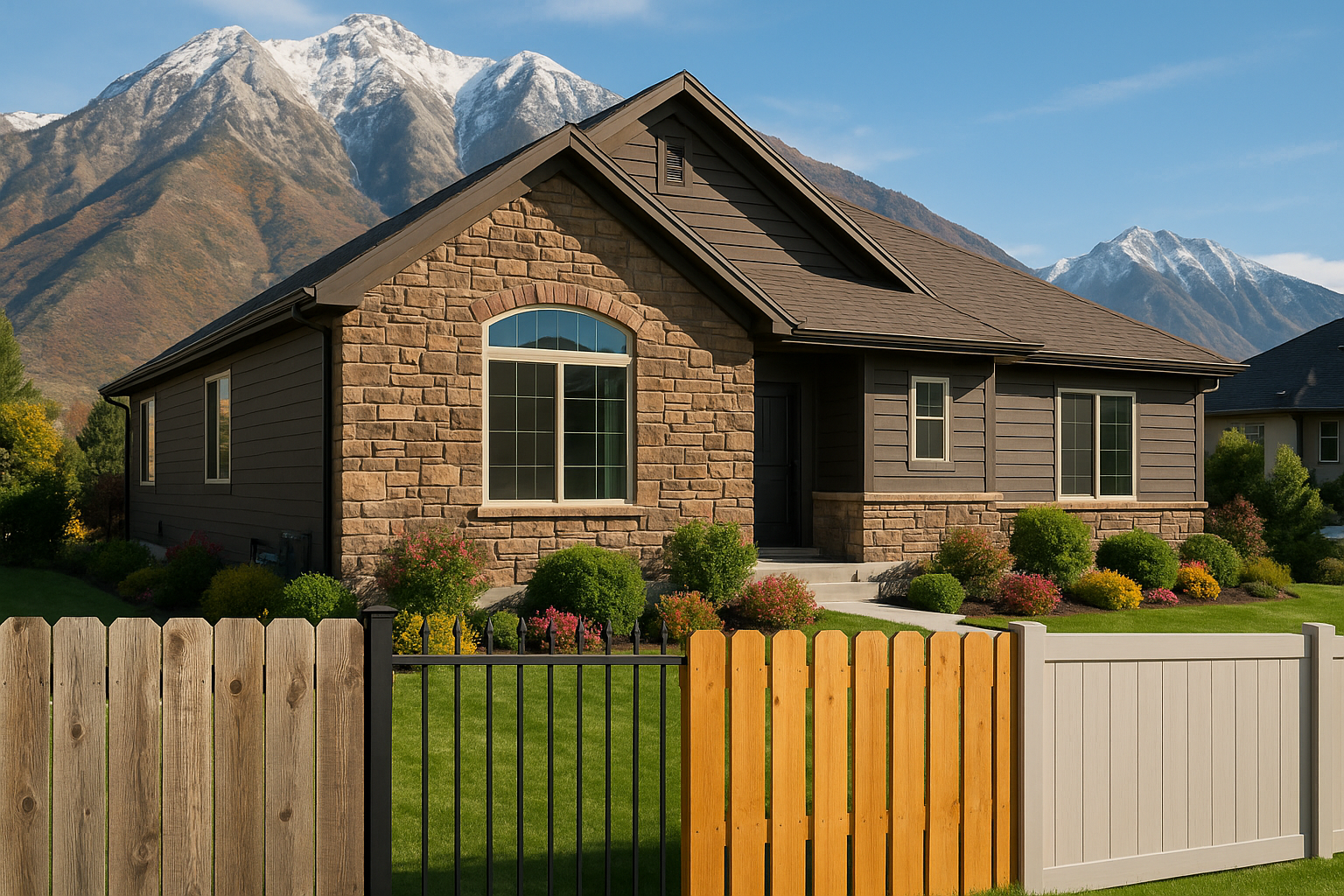
Sometimes it helps to just see the stats side-by-side. Here is how the big contenders stack up for our specific region.
| Material | Maintenance Level | Durability in Utah | Cost Estimate |
|---|---|---|---|
| Vinyl (PVC) | Very Low | High (Watch for impact in cold) | Moderate |
| Cedar Wood | High (Staining/Sealing) | Moderate to High (With care) | Moderate |
| Ornamental Iron | Low | Very High | High |
| Chain Link | Very Low | High | Low |
Ornamental Iron: The “View” Fence
Okay, let’s say you live on the East Bench or somewhere in Highland where you have a killer view of the valley. The last thing you want to do is slap up a 6-foot solid wall that blocks that million-dollar scenery.
This is where ornamental iron (or steel) shines. It’s strong, secure, and classy. It keeps the dog in but lets the view in, too.
Historically, iron fences were a pain because they rusted. You’d have to scrape and paint them constantly. But modern ornamental iron is usually powder-coated galvanized steel. That powder coating is tough—it laughs at sprinklers and snow.
The downside? It offers zero privacy. If you want to sunbathe in the backyard without the neighbors watching, iron isn’t the move unless you plant a hedge behind it. But for curb appeal and durability? It’s hard to beat.
Chain Link: Function Over Form
I know, I know. When you hear “chain link,” you probably think of a construction site or a school playground. It doesn’t exactly scream “luxury garden.”
But hold on a second. Chain link has come a long way, specifically black vinyl-coated chain link. The black coating helps the fence disappear into the background visually, rather than that shiny galvanized silver that reflects the sun into your eyes.
It is hands down the most affordable option. If you have a massive lot in Riverton or Herriman and you just need to keep the dogs contained without spending your life savings, this is the smart play. It’s incredibly durable against wind because the air passes right through it. No wind resistance means no leaning fences after a storm.
Composite Fencing: The Best of Both Worlds?
You might have heard about composite fencing—it’s made from a mix of recycled wood fibers and plastic. Think of it like Trek decking, but for your fence.
Ideally, this gives you the look of wood with the durability of plastic. It’s heavy, solid, and doesn’t need painting.
So, what’s the catch? The price tag. Composite is usually the most expensive option on the list. Also, because the material is heavy, Installation is more labor-intensive and requires sturdy posts. But if you have the budget and you hate the “plastic” look of vinyl but dread the maintenance of wood, composite is a fantastic middle ground.
Matching the Fence to the Architecture
You wouldn’t put bumper stickers on a Ferrari, right? In the same way, you want your fence to match the vibe of your house.
If you’re in a modern, boxy home in Draper, horizontal wood slats (often called a horizontal cedar fence) look incredible. It’s sleek and contemporary. If you’re in a historic bungalow in the Avenues or Sugar House, a classic picket style or Wrought Iron fits the character much better.
Don’t forget the HOA.
This is the part where I have to be the buzzkill. If you live in a master-planned community (and there are a lot of those popping up in Lehi and Saratoga Springs), check your CC&Rs before you fall in love with a material. Some HOAs strictly forbid chain link; others only allow tan vinyl. It’s better to check the rules now than to have to tear down a brand-New Fence later.
Let’s Talk About “The Gap”
No, not the clothing store. I’m talking about the gap at the bottom of the fence. This is a detail a lot of people overlook until it’s too late.
If you have a small dog, a gap under a Vinyl Fence can be an escape hatch. If you have a garden, that gap is a welcome mat for rabbits. When we install fences, we have to account for the grade of the land. Utah yards are rarely perfectly flat.
Stepping the fence (where the top looks like stairs) keeps the gap manageable on a slope. Racking the fence (where the rails follow the angle of the ground) keeps the gap tight but can look a little funny if the slope is steep. It’s these little technical details that make hiring a pro worth it.
So, What Should You Choose?
If you are feeling overwhelmed, take a breath. It really boils down to three questions:
- What is your budget? (Chain link wins here, followed by wood/vinyl, then iron/composite).
- How much maintenance will you actually do? (Be honest. If you won’t stain it, don’t buy wood).
- Do you need privacy or a view?
Most of our customers in Salt Lake County lean toward vinyl for the backyard (privacy, low maintenance) and maybe iron for the front (curb appeal). But there is no wrong answer, provided you buy quality materials. A cheap Vinyl Fence from a big-box store is thinner and less UV resistant than the professional-grade stuff we use. You get what you pay for, especially when the canyon winds start howling.
Ready to Upgrade Your Yard?
Choosing a fence is a big decision, but you don’t have to figure it out alone. At Utah Fencing Company, we’ve seen every type of yard, weather condition, and HOA restriction this state has to throw at us. We know what lasts, and we know how to make it look great.
Whether you are ready to install a beautiful cedar privacy fence or you just need a sturdy vinyl barrier to keep the kids safe, we are here to help.
Let’s get your project started.
Call us at 801-905-8153 or Request a Free Quote today. Let’s build something that lasts.